MIGRATORY BIRD
Feature Film- Directed by Aman Anam Director of Photography by Yashasvi Chadha
About Film :
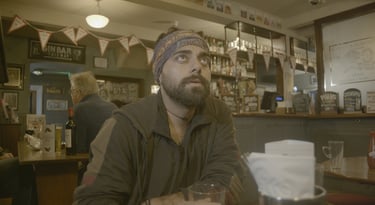
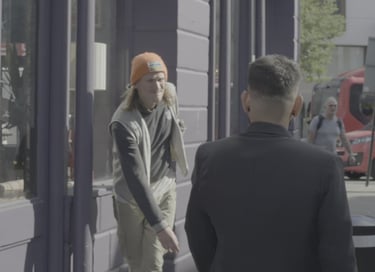
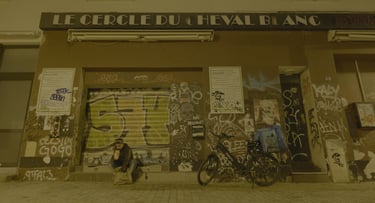
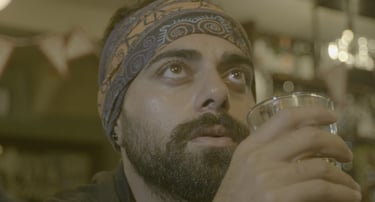
Migratory Bird follows the journey of a male protagonist, a delivery person living in London. Overwhelmed by a grueling and frustrating daily routine, he finds himself constantly stressed. His love life has deteriorated, and his family, struggling financially, discourages him from returning home as they cannot support his future.
Cycling becomes his sole refuge, a stress-relieving activity that provides him with a sense of freedom. In search of a fresh start and a purpose, he embarks on an extraordinary journey, cycling from London to Paris and then to Germany. Finally, in Berlin, he discovers his life's true purpose and decides to build his future there, embracing a renewed sense of direction and hope.
IMDB link: https://www.imdb.com/title/tt43636809/?ref_=ext_shr_lnk
Team :
Aman Anam says the idea for this film began during the first COVID lockdown, when I made a short film called Dibba about existential crisis. I later wanted to turn that idea into a feature, but I didn’t yet have the confidence or a script. After writing two plays and several songs, I finally felt ready. I developed the story in my mind for months and wrote the feature in 2024.
This became my first feature film, and I decided that the only person who could stop me was myself. With no financial support, we began making it happen, using my own earnings to fund the process. What started as an outer journey also became a deeply personal inner journey that changed my perspective.
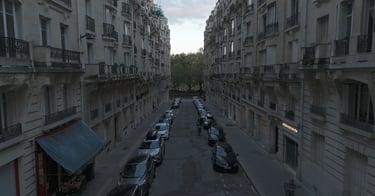
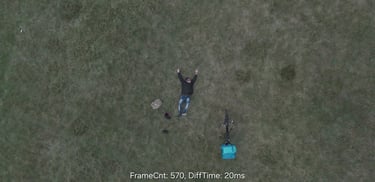
The original plan was to travel from London to Paris and Berlin by bike, but financial limitations changed the route. We travelled from London to Brighton, then by ferry to Dieppe and train to Paris. The journey was physically demanding—I became seriously unwell with a chest infection—but the passion to complete the film kept us going. We also took some risky drone shots in Paris and Berlin, often filming quickly and leaving the location.
After returning to London, I was struggling financially and physically. I had borrowed money from friends, my bank account was in the negative, and while working to repay them, I experienced my first anxiety and panic attack when the shoot was delayed beyond our control. Eventually, doctors discovered a bacterial infection and multiple food allergies. After a difficult experience with the NHS, I returned to India, where I spent six months recovering.
When I came back to London, the weather was no longer suitable for the film, so we waited. That waiting period unexpectedly became one of the most important parts of the process. I continued developing the script and finally learned to look at it from the outside, rather than only through the eyes of its writer. When we resumed filming, we had a fresh energy, and the shoot went much more smoothly. Internally, however, I was still fighting a war while appearing completely calm on the outside. My friends played a huge role in helping me through it.
One memorable incident happened near the London Eye while we were taking an unauthorised drone shot. Within minutes, a helicopter appeared and seemed to follow me as I crossed the bridge and moved through the streets. I still don’t know whether it was actually following me, but in that moment, it certainly felt like it.
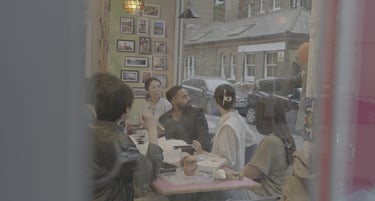
As a director, one of my hardest moments came during an indoor shoot when we had already exceeded our allotted time. One actor forgot his lines and began improvising in a completely different direction. With no time for multiple retakes, I couldn’t properly intervene. I was watching the scene fall apart while silently struggling inside. Eventually, we managed a few retakes, but the character ended up different from what I had written. Surprisingly, that difference became part of the film’s beauty.
Looking back, the film became much more than a production. It became a journey of persistence, illness, anxiety, friendship, uncertainty and self-discovery—and ultimately, proof that sometimes the biggest obstacle to creating something is simply believing that you cannot.
Yashasvi Chadha The film presented several technical and creative challenges, particularly because it was shot across multiple locations with a limited budget and restricted production time. The cinematography was captured using a Panasonic Lumix S1H paired with 7Artisans Vision lenses, which helped create the desired cinematic character and visual consistency. Due to the production limitations, it was not always possible to fully plan every visual and technical detail during pre-production. As a result, decisions involving framing, camera movement, lens selection, composition, and lighting often had to be made quickly on location. Each location brought different challenges in terms of available space, natural light, atmosphere, and setup time, requiring a flexible and practical approach to cinematography.
One of the most rewarding aspects of the production was the strong creative relationship with the director, which made it easier to understand the aesthetic and emotional intention behind each sequence before filming. This collaboration allowed visual decisions to be made more confidently and efficiently, even when circumstances required improvisation. The majority of the film was shot using natural light, helping create an authentic and organic visual atmosphere while also working within the limitations of the budget. For interior sequences, LED panel lights and other supporting equipment were used to enhance the available light and provide greater control over exposure and mood. Overall, the production required a combination of careful visual judgement, adaptability, and creative problem-solving to achieve the director’s vision despite the practical limitations.